
Most advice about monetizing an audience assumes you already have a large one. Ad deals, sponsorships, affiliate income — nearly all of it needs scale to work. If you're under 10,000 followers, that advice mostly doesn't apply to you yet, and that can make it feel like monetization is something that happens later, once you've "grown enough."
That's not quite right. The short answer is that under 10,000 followers, the thing worth monetizing isn't your reach — it's your trust. A smaller, engaged audience that already comes to you for advice can be monetized directly, without needing more followers first.
Here's how.
Why follower count is the wrong metric here
Sponsorships and ad revenue scale with reach, so they genuinely do require a large audience. But there's a second kind of value a following creates that has nothing to do with size: the fact that people trust your opinion enough to ask for it.
If people already DM you questions — about your training methods, your process, your niche, your experience — that's a signal that monetization doesn't need to wait for growth. It needs a way to capture the value that's already there.
Ways to monetize a smaller, engaged audience
Paid Q&A
If your DMs already have people asking for advice, the most direct option is to charge for that advice directly. A paid Q&A page lets a follower pay a fixed price — often $5 to $20 to start — to ask you one question and get a real answer. No product to build, no course to record, no minimum audience size required.
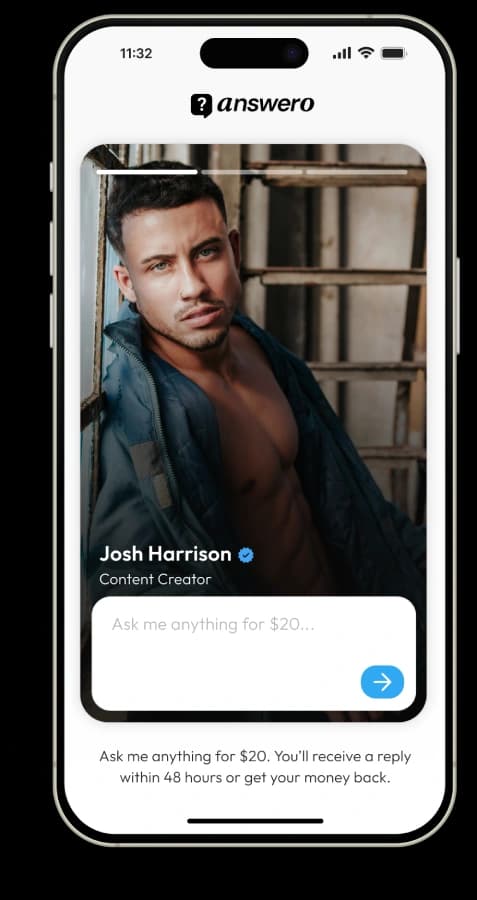
Tools like Answero are built specifically for this: a shareable page, a fixed or custom price, and an automatic 48-hour refund guarantee if a question goes unanswered, so the fan takes on none of the risk. It works from a genuinely small base, because the constraint isn't reach — it's whether people already trust your opinion enough to pay for it.
One-off digital products
A single template, guide, or resource that solves one specific problem your audience already has. This works at low follower counts because it doesn't rely on broad appeal — it relies on solving a known, specific need for the people already paying attention.
Affiliate links, used narrowly
Not scaled affiliate marketing, but recommending the two or three products you'd genuinely tell a friend about. At a smaller audience size, authenticity matters more than volume, and a narrow, honest recommendation converts better than a wide, generic one.
Small-group or 1-1 paid conversations
If you have the capacity, direct paid access — even informally — can work well under 10,000 followers, since a smaller audience is easier to serve personally without it becoming unmanageable.
What doesn't work well yet
Ad revenue and most sponsorship deals genuinely do need scale, so it's worth not chasing these too early. It's also worth being cautious about building a full course or membership before you've validated that people will pay you for anything — a paid Q&A page is a much lower-effort way to test that first, since it takes minutes to set up rather than weeks to build.
Why this is often easier under 10,000 followers, not harder
A smaller audience is usually a more engaged one. People following a creator with a few thousand followers are there because they specifically care about that person's perspective, not because an algorithm surfaced them once. That's exactly the audience most likely to pay for a direct, personal answer — arguably more likely than a much larger, more passive following would be.
The DM questions you're already getting for free are the clearest signal you have that monetization is possible right now, at your current size.
Frequently asked questions
Is there a minimum follower count needed to monetize with paid Q&A?
No. What matters is whether your audience already asks you for advice, not how many people follow you. A creator with 3,000 to 5,000 engaged followers can succeed with this model.
What should I charge if I'm just starting out?
A lower starting price, such as $5 or $10 per question, is a good way to build the habit with your audience before raising it. The price also filters for serious questions rather than casual ones.
Do I need a website to start monetizing a small audience?
No. A paid Q&A page is typically a single link you can drop straight into your Instagram bio or Stories — no separate website required.
What if my audience won't pay because I'm too small?
This is a common worry, but it's usually about trust, not size. If people already ask you questions for free, they've already shown they value your opinion. A guarantee — such as an automatic refund if you don't answer in time — removes most of the remaining hesitation.
Your audience doesn't need to be bigger to start paying you for what you already know. Set up your Answero page and turn today's DMs into income.